Design Systems: Scaling Your Tech Product
The High Cost of the "One-Off" Design: Why Georgian Startups Slow Down at Year Two
Imagine a fast-growing startup in the heart of Saburtalo. They’ve just raised a seed round, the team is expanding, and they’re rushing to add three new features to their mobile app. But there’s a problem: the 'Primary Button' in the new checkout flow doesn’t match the one in the user profile, and the font weights for the Georgian script are inconsistent across the dashboard. This isn’t just an aesthetic annoyance; it’s a symptom of technical debt that is actively draining your runway. In the competitive world of Design Systems Georgia, failing to standardize your UI early on is like building a skyscraper on a foundation of loose bricks. By the time you reach year two, your developers are spending 40% of their time fixing visual bugs rather than building new value.
At our Tbilisi digital agency, we see this pattern constantly. Companies treat design as a series of individual pages rather than a living, breathing ecosystem. When every new feature requires a designer to 'reinvent the wheel' and a developer to write CSS from scratch, you aren't just losing money—you’re losing agility. In 2026, the winners in the Caucasus tech scene aren't the ones with the flashiest one-off graphics; they’re the ones who have built a scalable language that allows them to ship high-quality features in days, not weeks.
Bridging the Gap: How Design Systems Align Business and Tech
A design system is not just a library of buttons and colors; it is a single source of truth that aligns your product, engineering, and marketing teams. Think of it as the 'Source Code' for your brand. When a business decision is made to update the primary brand color, a robust system allows that change to propagate through your entire web and mobile infrastructure in minutes. Without a system, this simple task becomes a cross-departmental nightmare of manual updates and 'missed spots'.
The ROI of a UI/UX design system is measurable. Studies suggest that teams using a shared component library can increase their development velocity by up to 30%. This efficiency gain comes from the elimination of low-value decision-making. Should this modal have a 16px or 20px padding? With a design system, that question was answered six months ago. Your team is now free to focus on the truly difficult problems: user psychology, conversion flows, and business logic.
The Typography Challenge: Georgian, English, and Russian
One of the most complex aspects of building a product for the Georgian market is handling our unique script alongside Latin and Cyrillic characters. Georgian Mkhedruli is visually stunning, but it requires different line-heights and letter-spacing than English to remain legible. A professional design system accounts for these multilingual nuances at the foundation level.
- Vertical Rhythm: Georgian characters often have different ascender and descender heights. A design system ensures that your layouts don't 'break' or look cramped when a user switches from the English to the Georgian interface.
- Fallback Strategy: Ensuring that if a custom brand font fails to load on a 4G connection in a rural region, the system defaults to a legible, pre-defined system font that preserves the layout's integrity.
- Consistency: Having a unified set of typographic rules means your brand speaks with the same voice, whether it's in a legal contract in Tbilisi or a marketing banner in London.
The Infrastructure of Consistency: Components as Code
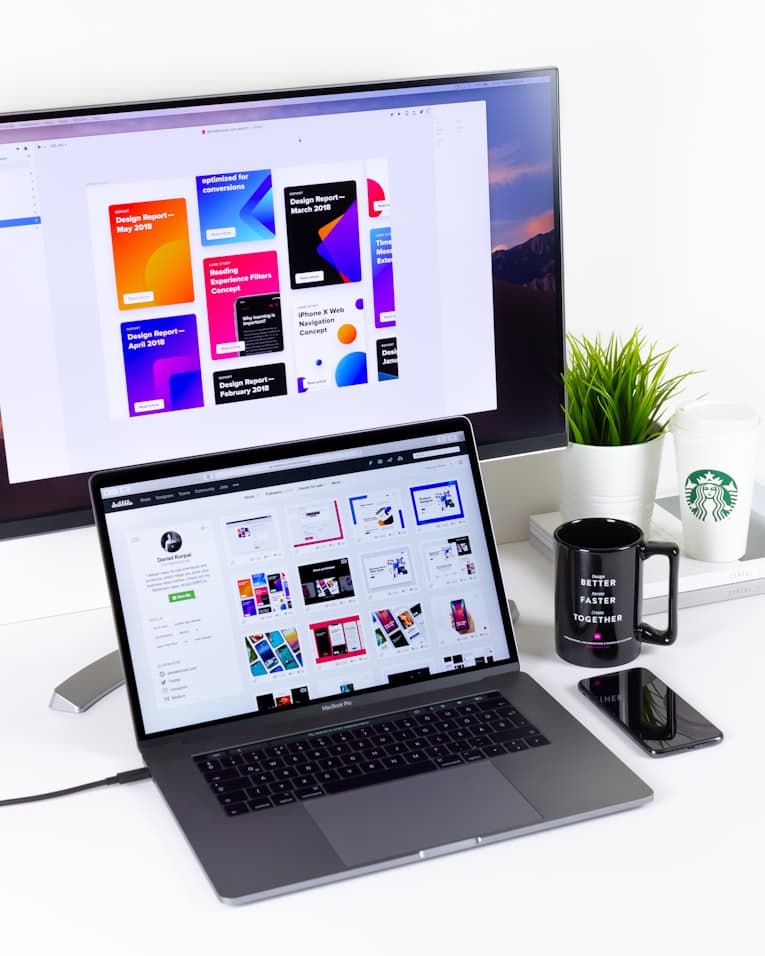
In 2026, a design system is only as good as its implementation. We move beyond static Figma files and into the world of Design Tokens and shared component libraries. Design tokens are the smallest atoms of your system—colors, spacing, typography—stored as data. When these tokens are integrated into a modern framework like Next.js, they become the DNA of your product. If a designer changes a 'success green' in the design tool, that change is automatically reflected in the code, ensuring a perfect handoff every time.
This 'Components as Code' approach drastically reduces the friction between design and engineering. Developers no longer ask 'how much margin should I add here?'; they simply use the `spacing.md` token. This reduces the number of 'CSS hacks' and ensures that the final product looks exactly like the approved design. For a Georgian SME looking to maintain a premium brand image, this level of polish is what separates a professional product from a 'homemade' one. It builds immediate user trust, signaling that your company pays attention to the details that matter.
ROI: Moving from Pixel-Pushing to Product Strategy
Ultimately, a design system is an investment in your company’s future. By front-loading the effort of defining your UI standards, you are buying speed and consistency for the years to come. It allows you to scale your product without scaling your headcount at the same rate. You don't need five designers to manage five products; you need one design system that powers all five. This is the model used by every global tech leader, and it is the only way for Georgian startups to compete on an international stage.
- Reduced Maintenance: Fixing a bug in a single component fixes it everywhere it’s used across your app.
- Faster Onboarding: New hires can start contributing immediately because the 'rules' of the UI are already documented and codified.
- Brand Cohesion: Your users enjoy a seamless experience as they move between your website, mobile app, and marketing materials.
In the fast-moving Georgian digital market, the ability to iterate quickly is your greatest competitive advantage. A design system isn't a set of rules that slows you down; it is a set of tools that sets you free. At Effect Design, we help businesses move beyond the 'one-off' design cycle and build the systems they need to dominate their niche. Your product deserves a language that is as ambitious as your vision.